
Emanuel County, Georgia; Land clearing debris removal in Swainsboro, GA
Land Clearing Debris Removal in Swainsboro, GA
Three disposal options for Emanuel County clearing projects — full haul-off, mulch in place, or Georgia Forestry Commission compliant burning. We handle the debris so you don't have to.
Get Free Quote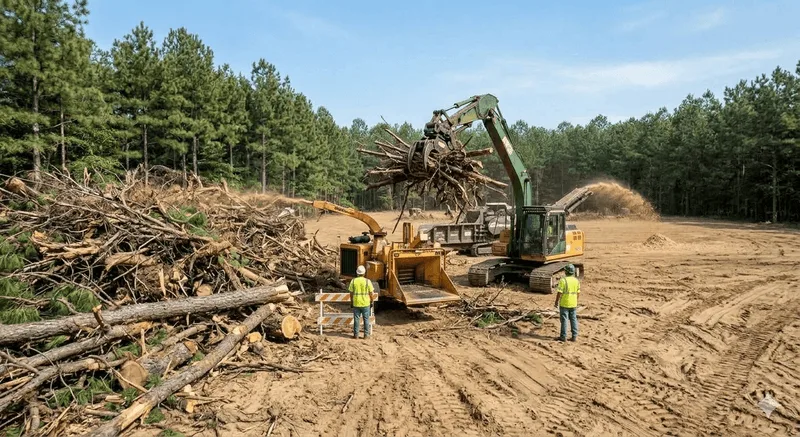
How much does debris removal cost in Swainsboro, GA?
In Emanuel County, Georgia, debris removal costs typically range from $500 to $3,000 depending on debris volume and disposal method. Full haul-off to a recycling facility is the most expensive option but produces a clean, construction-ready site — which affects pricing compared to on-site burning or mulching. The only accurate debris removal estimate comes from an on-site assessment of your Swainsboro property.
Land Clearing Debris Removal Options in Swainsboro & Emanuel County
When land is cleared in Swainsboro or anywhere across Emanuel County, the result is a significant volume of cut trees, brush, limbs, stumps, and vegetative material that must be addressed before the property is usable. Clearing debris after land clearing directly affects the project cost, timeline, and the final condition of the site. Swainsboro Land Clearing offers three primary land clearing debris removal approaches throughout southeast Georgia, and the right choice depends on your property's size, what you plan to do with the land next, and your timeline for construction or development.
Option 1: Full Haul-Off
Full haul-off means all debris — cut timber, brush, limbs, and root masses — is loaded and transported off-site to a disposal or wood recycling facility. This debris removal option leaves the cleared property completely free of material and is typically required when the lot will be immediately graded and prepared for construction. Haul-off adds trucking, equipment, and disposal costs to the clearing project and is generally the most expensive disposal method, but it produces the cleanest result. For Swainsboro and Emanuel County lots where development begins immediately after clearing, full haul-off is often the practical choice because it eliminates any debris that would interfere with grading, stump grinding, or construction equipment.
Option 2: Mulch in Place (Forestry Mulching)
Forestry mulching is both a clearing method and a debris disposal solution in one step. A forestry mulcher grinds trees, brush, and vegetation into wood chip mulch that falls back onto the soil surface — eliminating the need for haul-off entirely. The resulting mulch layer 2–4 inches deep provides meaningful erosion protection for the newly exposed soil, which is particularly valuable during southeast Georgia's spring rain season. Mulch in place is generally the most cost-effective debris removal option on mid-density wooded lots where forestry mulching equipment is appropriate (trees up to approximately 8–10 inches in diameter). For Emanuel County property owners who are not immediately starting construction, mulch in place provides both land clearing debris removal and soil protection simultaneously.
Option 3: Pile and Burn
On larger rural Emanuel County properties where haul-off costs would be prohibitive and forestry mulching isn't suitable for the tree sizes involved, pile-and-burn is a traditional and cost-effective disposal option. Debris is organized into burn piles at safe distances from structures, property lines, and adjacent timber, and burned under Georgia Forestry Commission rules. The Georgia Forestry Commission requires a burn permit for any outdoor burning and restricts burning during drought conditions, high fire danger days, and certain times of year. Open burning must be conducted at least 25 feet from any structure and piles must be attended at all times during burning. Emanuel County may have additional local ordinances affecting burn locations, so permit verification with the Georgia Forestry Commission before burning is a required step — not optional.
Choosing the Right Debris Disposal Method
The debris disposal method that makes sense for your Emanuel County property depends on several factors: what you're doing with the land next, your budget for the disposal phase, the density and type of trees being cleared, and whether your timeline allows for a burn-pile approach. Your free on-site quote assessment includes a discussion of which disposal option is most appropriate for your specific property and development goals. In some cases, a combination of methods — forestry mulching on lighter-density areas and haul-off on timber-heavy zones — produces the best overall result.
Swainsboro Land Clearing handles debris disposal throughout Emanuel County. Submit a free quote request for an on-site evaluation and disposal recommendation specific to your property.
Benefits of Professional Debris Removal in Swainsboro, GA
Three Disposal Options
Full haul-off for construction-ready lots, mulch in place for cost-effective erosion protection, or pile-and-burn for large rural acreage — we match the disposal method to your property and development timeline.
Georgia Forestry Commission Compliant Burning
When pile-and-burn is the right option, we handle burn permits, pile placement at compliant setback distances, and attended burning per Georgia Forestry Commission rules — keeping your project legal and safe.
Mulch-in-Place Option Reduces Erosion
Forestry mulching leaves a protective wood chip layer on cleared soil that reduces raindrop impact and slows surface runoff — providing meaningful erosion protection during Georgia's heavy spring rain events without the cost of haul-off.
Full Haul-Off Available
For Emanuel County lots where development starts immediately after clearing, full haul-off removes every piece of debris — leaving a completely clear surface ready for rough grading, foundation forms, or septic system layout.
How Swainsboro Debris Removal Works
Debris Removal Cost Ranges
Typical ranges for Emanuel County, GA — actual pricing requires an on-site assessment.
Debris Removal Pricing — Emanuel County
- Forestry mulching (mulch in place) — per acre$1,000 – $3,500
- Full haul-off — residential lotRequest Quote
- Pile and burn (large rural acreage)Request Quote
- Combination disposal (mixed methods)Request Quote
Debris removal pricing depends on the volume of material, property size, chosen disposal method, and hauling distance. Haul-off and burn-pile quotes are highly site-specific — accurate pricing requires an on-site assessment of your property's debris load.
Debris Removal Questions & Answers
Answers specific to debris disposal after land clearing in Emanuel County, Georgia.
What happens to trees and debris after land clearing?
In Emanuel County, Georgia, debris from land clearing is handled through one of three methods depending on the project scope and property owner preferences: haul-off (debris is loaded and transported off-site to a disposal or recycling facility), mulch in place (a forestry mulcher grinds trees and brush into wood chip mulch that remains on the soil surface), or pile and burn (debris is piled and burned on-site under Georgia Forestry Commission rules). The method affects cost, timeline, and the final condition of the cleared property — discuss your options during your free quote assessment.
Is burning cleared debris legal in Georgia?
In Emanuel County, Georgia, open burning of land clearing debris is legal but regulated. The Georgia Forestry Commission requires a burn permit for any outdoor burning during certain times of year, and burning is restricted on days with high fire danger or drought conditions. Open burning must be conducted at least 25 feet from any structure, and burn piles must be attended at all times. Emanuel County may have additional local ordinances affecting burn locations and pile sizes. Always obtain the required Georgia Forestry Commission permit and check local restrictions before burning cleared debris.
What is forestry mulching and how does it work?
In Emanuel County, Georgia, forestry mulching is a land clearing method that uses a single machine — a forestry mulcher — to cut, grind, and mulch trees, brush, and vegetation in one pass. The machine's rotating drum with carbide-tipped teeth shreds all vegetation into wood chip mulch that falls back onto the soil surface. This eliminates the separate debris disposal step entirely: there's nothing to haul off, pile, or burn. The resulting mulch layer helps retain soil moisture and reduce erosion on freshly cleared land. Forestry mulching works best on lots with trees up to about 8–10 inches in diameter and is particularly cost-effective on mid-density wooded lots.
Can land clearing cause soil erosion?
In Emanuel County, Georgia, yes — land clearing exposes bare soil that is highly vulnerable to erosion, especially during Georgia's heavy spring rain events. Mulching debris in place rather than hauling it off helps reduce erosion risk because the wood chip layer protects bare soil from raindrop impact and slows surface runoff. For projects where debris is removed by haul-off or burning, Georgia EPD requires erosion and sediment controls — silt fence, temporary seeding, and sediment traps — to protect adjacent waterways and neighboring properties.
How much does land clearing cost in Georgia?
In Emanuel County, Georgia, land clearing costs vary significantly by method and debris disposal approach. Forestry mulching, which eliminates separate debris removal costs, typically runs $1,000–$3,500 per acre. Traditional clearing with haul-off adds trucking and disposal costs on top of the clearing work itself, making it generally more expensive than mulching on mid-density wooded lots. Burn-pile disposal adds labor for pile building and burn monitoring but eliminates hauling costs. The most accurate number for your specific Emanuel County property comes from an on-site assessment.
When is the best time to clear land in Georgia?
In Emanuel County, Georgia, late fall through early spring — roughly October through March — is generally the best time to clear land. Vegetation is dormant or less aggressive, ground conditions are typically firmer for equipment, and open burning is often more permissible during Georgia's cooler, lower fire-risk months. Clearing during summer in southeast Georgia's humid climate means faster vegetation regrowth on disturbed areas and higher fire risk during the burn pile phase. However, land clearing can be performed year-round in Emanuel County — soil and weather conditions during your project window are assessed at the time of your free quote.
How much does debris removal cost in Swainsboro, GA?
Debris removal in Swainsboro, GA and Emanuel County typically costs $500–$3,000 depending on debris volume and disposal method. Forestry mulching, which eliminates separate debris removal costs, runs $1,000–$3,500 per acre, while full haul-off to a recycling facility costs more but produces a clean, construction-ready site — a free on-site assessment confirms the right approach and price for your property.
Get a Free Debris Removal Quote
Tell us about your property. We'll assess it in person and give you a real price — no call centers, no guesswork.
Fill out our free quote request and we'll get back to you promptly with a real price for your property.
Request a Free QuoteNo call centers · Serving Emanuel County, GA property owners.